




Browse all articles
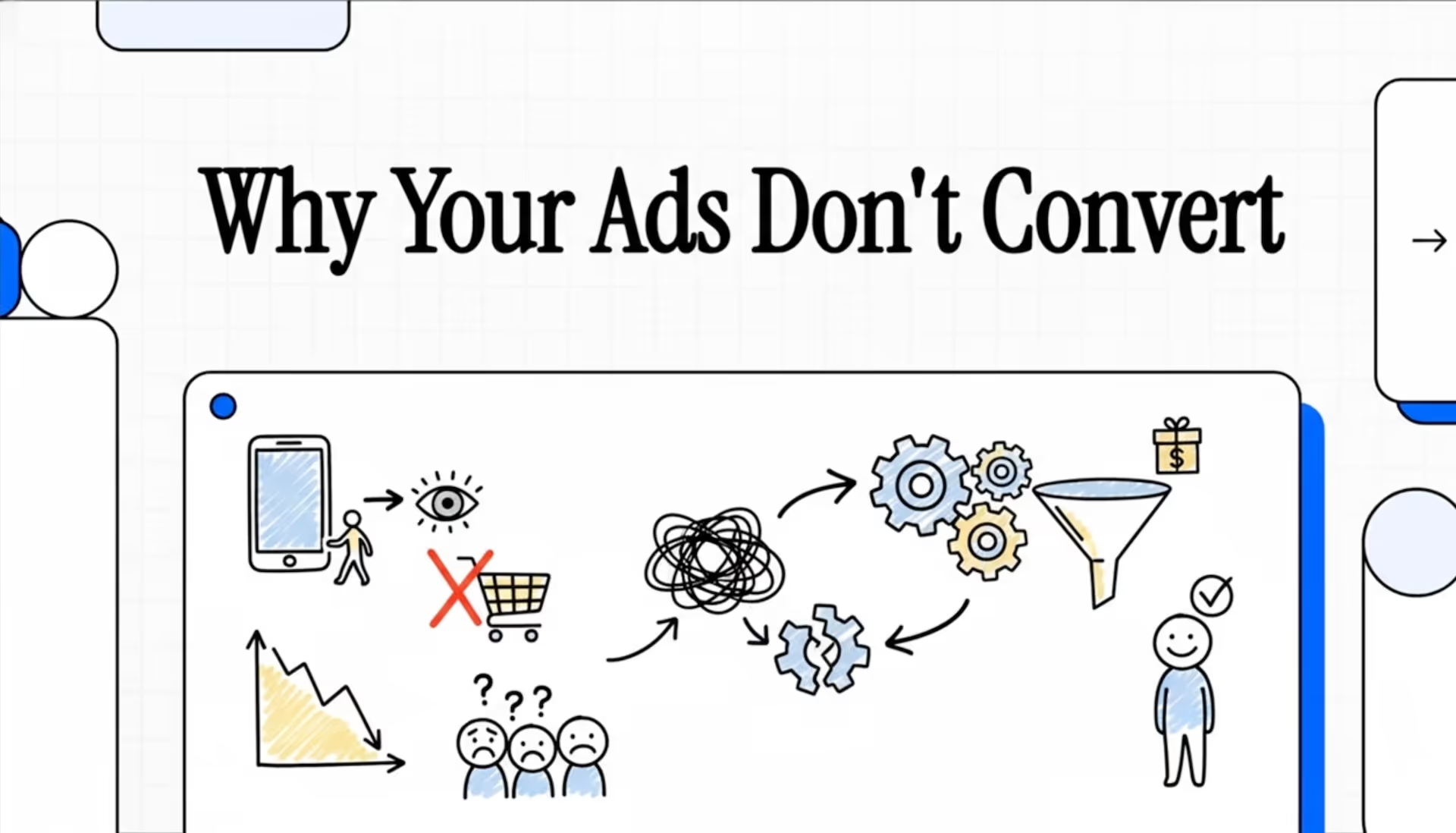
If you're asking "why are my ads not converting?" or wondering why you're getting paid ads clicks but no conversions, you're not alone.
You're seeing impressions.
You're getting clicks.
You're paying real money.
But conversions—sales, signups, or leads—aren't following.
This is one of the most frustrating problems in modern marketing: paid ads getting traffic but no conversions. It feels like the platforms are broken—or worse, like you're throwing money into a black hole.
Here's the truth:
Paid ads aren't failing because the algorithms stopped working.
They're failing because the system behind the ads isn't aligned.
Today's ad platforms judge performance based on what happens after the click. If users don't convert, hesitate, bounce, or get confused, the platforms quietly lose confidence. Costs go up. Reach goes down. And performance stalls.
In this guide, we'll break down:
- Why ads get clicks but no sales
- The real reasons behind low conversion rates from ads
- How to fix low converting ads without increasing spend
- And how to build a system that turns clicks into revenue consistently
This isn't about "10 ad hacks."
It's about fixing the flow.
Why Ads Don't Convert in Isolation Anymore
There was a time when paid ads were simpler.
Match the keyword.
Write the ad.
Bid smart.
Send traffic to a decent page.
That era is gone.
Today, Google Ads, Facebook Ads, LinkedIn, and Meta don't just evaluate ads—they evaluate outcomes.
When someone clicks your ad, the platform immediately watches:
- Did they understand where they landed?
- Did the page confirm the promise of the ad?
- Was it obvious what to do next?
- Did they engage—or bounce?
If users hesitate, scroll aimlessly, or leave, the platform interprets that behavior as risk.
And risk has consequences:
- Higher CPCs
- Fewer impressions
- Declining performance with no clear explanation
This is why many businesses experience high CPC, low conversions even when their ads "look fine."
The problem isn't effort.
It's alignment.
Why Am I Getting Clicks but No Sales?
If you're getting traffic but not conversions, something is breaking after the click.
This is one of the most common scenarios we see:
- Ads get approved
- CTR looks healthy
- Spend increases
- Conversions don't
So why does this happen?
Because clicks are intent signals, not commitments.
A click only means someone was curious enough to explore. Whether they convert depends on what they experience next.
The Most Common Causes
The most common causes include:
- Ad promise doesn't match the landing page
- Landing page is unclear, slow, or overwhelming
- Targeting is too broad or misaligned
- Creative attracts attention but not the right attention
- Conversion tracking is incomplete or broken
Let's break these down.
This Problem Affects All Platforms
Whether you're dealing with Google Ads not converting, Facebook ads not generating sales, or LinkedIn ads with low conversion rates, the underlying causes are often the same: misalignment between intent and experience.
The Ad-to-Landing Page Disconnect (The Silent Killer)
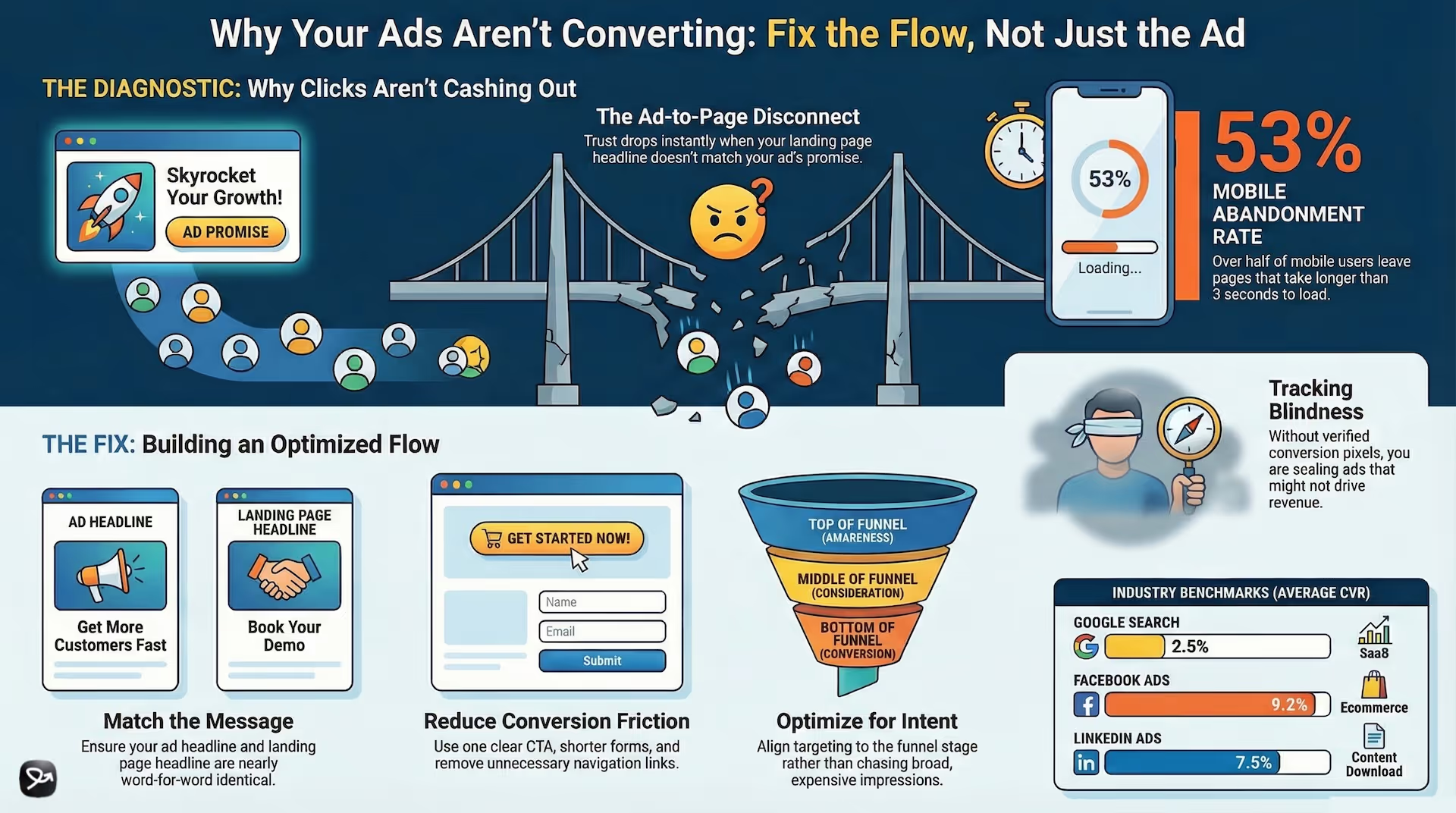
One of the biggest reasons paid ads aren't converting is a disconnect between the ad and the landing page.
This happens when:
- The ad promises one thing, but the page talks about something else
- The offer isn't immediately visible
- The CTA changes
- The page feels generic instead of specific
Imagine this:
You click an ad that says "Get 50% off your first service today."
You land on a homepage with no mention of the offer.
Trust drops instantly.
From the platform's perspective, that's a bad experience. From the user's perspective, it feels misleading.
How to Build Pages for Intent, Not Everyone
Your landing page should answer one question instantly:
"Am I in the right place?"
That means:
- Matching the headline to the ad's promise
- Repeating key language from the ad
- Showing a single, clear next step
- Removing navigation, distractions, and competing CTAs
Generic pages struggle in a personalized ad environment.
Specific intent wins.
Learn more about our Webflow landing page design services that are built for conversions from day one.
Landing Page Not Converting? Start Here
If you're seeing ad clicks but no conversions, your landing page is often the bottleneck.
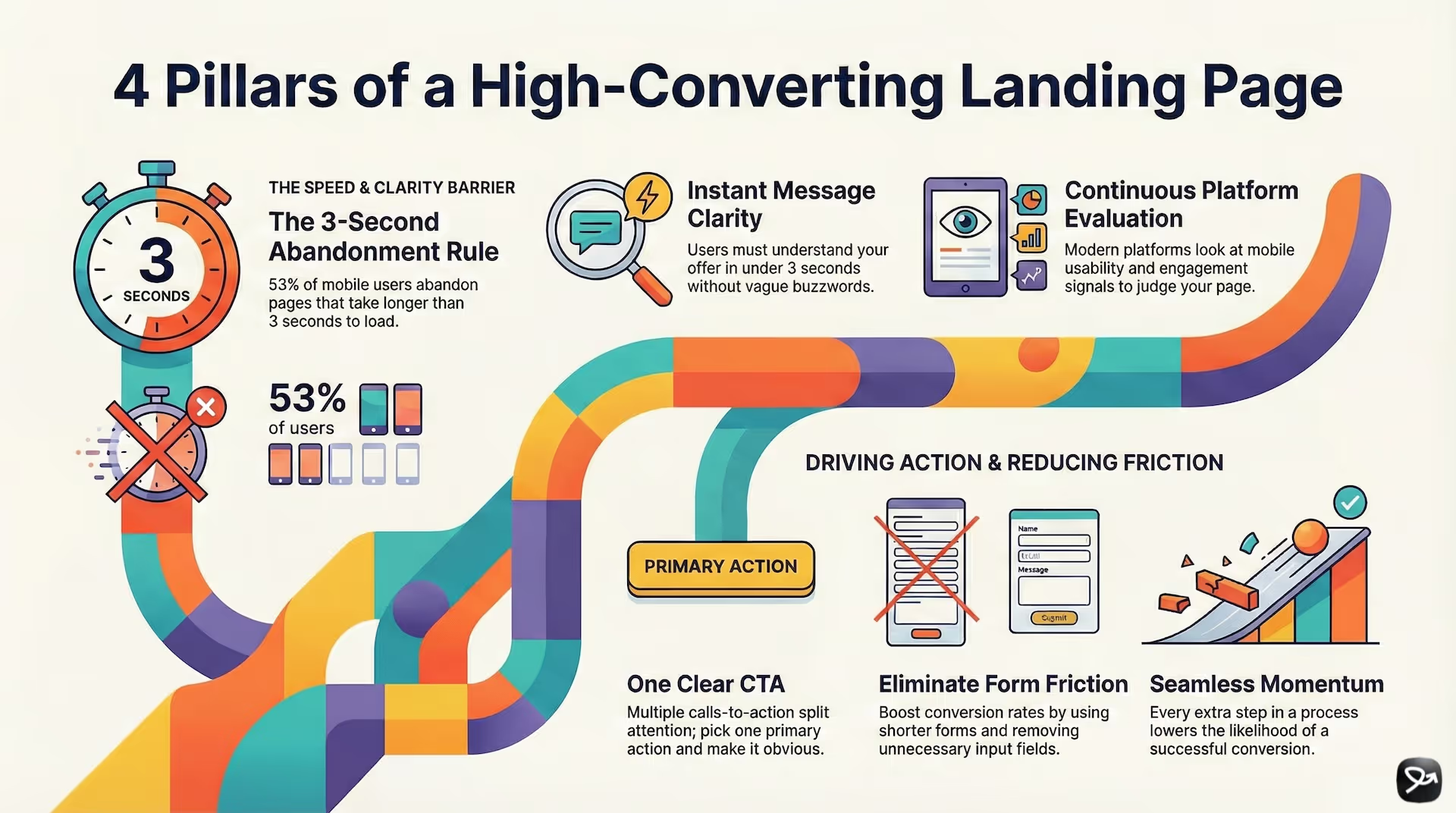
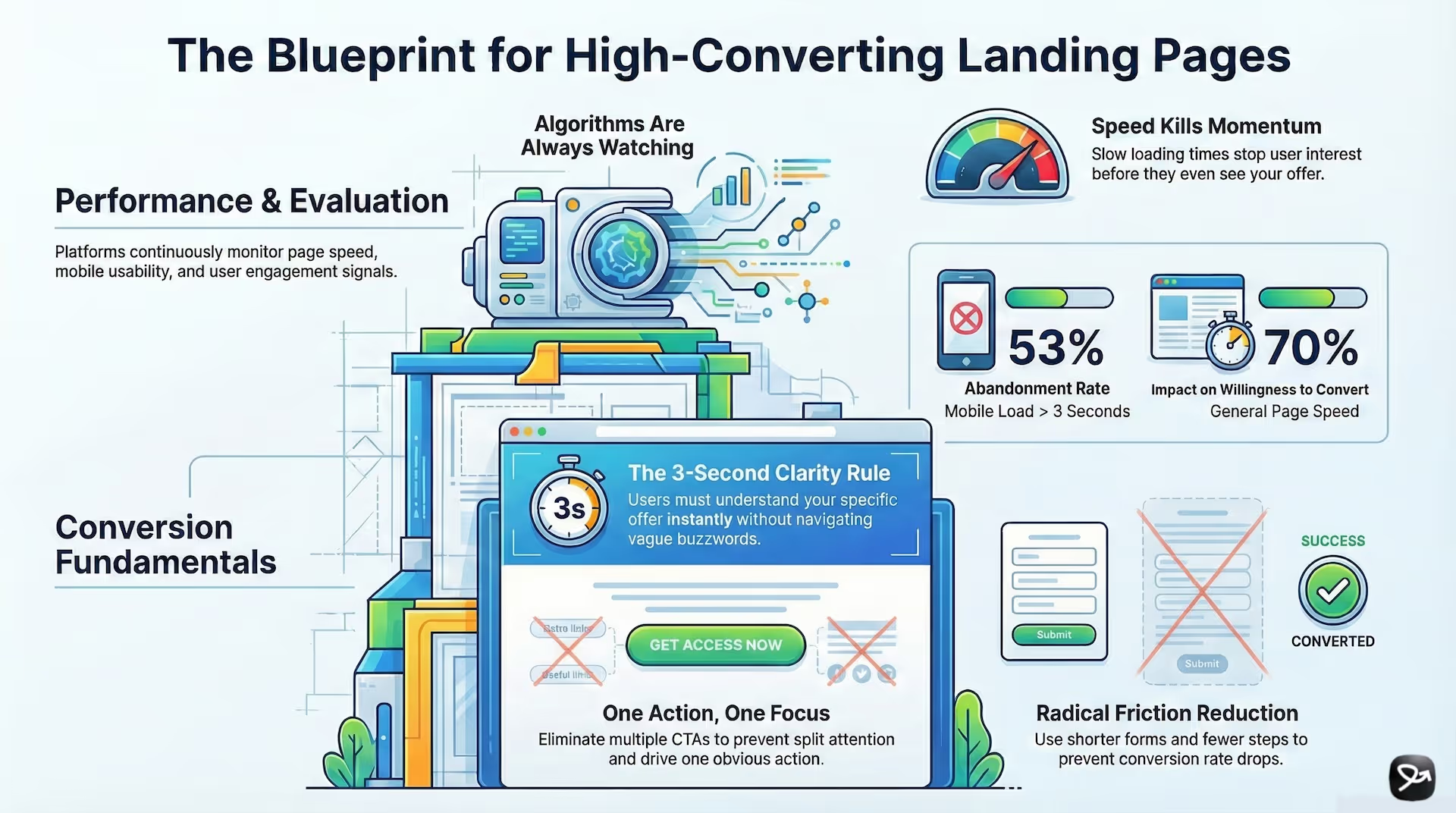
Modern platforms continuously evaluate landing page behavior—not just once.
They look at:
- Page speed
- Mobile usability
- Clarity of message
- Ease of conversion
- User engagement signals
A "basically fine" page isn't enough anymore.
Landing Page Conversion Tips That Actually Matter
If you want to improve your ad conversion rate, focus on these fundamentals first:
1. Speed
Almost 70% of users say page speed affects their willingness to convert. According to Google's research on page speed, 53% of mobile users abandon pages that take longer than 3 seconds to load.
Slow pages kill momentum before users even see your offer.
2. Clarity
Users should understand what you offer in under 3 seconds.
Avoid internal language, buzzwords, or vague positioning.
3. One Clear CTA
Multiple CTAs split attention.
Pick one action and make it obvious.
4. Reduce Friction
Shorter forms.
Fewer steps.
No unnecessary fields.
Every bit of friction lowers conversion rates.
Targeting Issues: You're Paying for the Wrong Attention
Another major reason ads get clicks but no sales is poor targeting.
This doesn't always mean "too broad."
It often means misaligned intent.
Signs of targeting issues:
- High impressions, low conversions
- Good CTR, terrible CPA
- High bounce rates
Why Broad Targeting Alone Doesn't Work
Reaching "everyone" feels safe, but it's expensive.
This is a common cause of wasted ad spend—high impressions and clicks from people who will never convert.
Modern ad platforms perform best when they can learn from high-intent behavior:
- Form submissions
- Time on page
- Scroll depth
- Engagement
If your audience doesn't have real intent, the algorithm has nothing useful to learn from.
How to Optimize for Intent, Not Volume
Instead of chasing impressions:
- Align targeting to funnel stage
- Exclude irrelevant audiences
- Use retargeting carefully (and don't overdo it)
- Let platforms learn before tightening too aggressively
The goal isn't traffic.
It's relevance.
Ad Creative Isn't the Problem—Lack of Learning Is
When conversions drop, many teams assume ad fatigue is the issue.
Sometimes it is. Often it's not.
Refreshing creative without understanding why something failed just resets the problem.
Weak or Confusing Creative Signals
If your creative:
- Looks polished but generic
- Tries to say too much
- Doesn't address a specific pain point
…it may get clicks without conversions.
How to Test Creative Inside a System
Creative should always answer a question:
- Does this message resonate?
- Does this hook attract the right audience?
- Does this visual clarify the offer?
Testing without context leads to wasted ad spend.
Testing within a flow leads to learning.
Conversion Tracking Issues: You Can't Fix What You Can't See
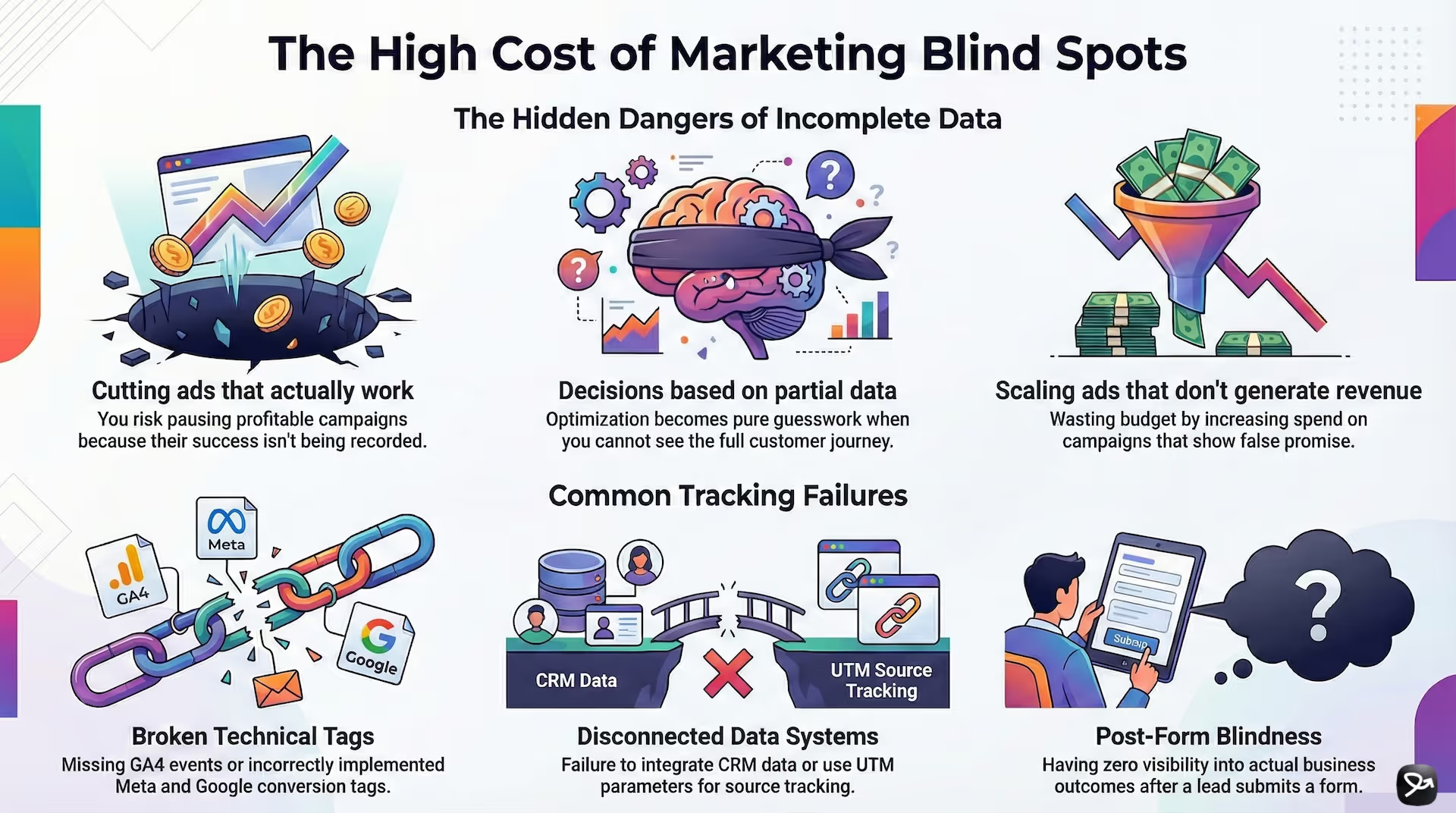
One of the most dangerous scenarios in paid advertising is incomplete tracking.
If you're not tracking conversions properly, you may be:
- Cutting ads that actually work
- Scaling ads that don't generate revenue
- Making decisions based on partial data
Common Conversion Tracking Problems
- Missing or incorrect GA4 events
- Broken Meta or Google conversion tags
- No CRM integration
- No UTMs
- No visibility into post-form outcomes
Without end-to-end tracking, optimization becomes guesswork.
Our Marketing Performance Subscription includes full conversion tracking setup and ongoing monitoring.
What Is Conversion Rate Optimization (And Why It Matters)
Conversion rate optimization (CRO) is the practice of improving the percentage of users who take a desired action.
But CRO isn't just about buttons and colors.
True CRO looks at:
- Message clarity
- User intent
- Experience flow
- Trust signals
- Friction points
When CRO is applied to ads and landing pages together, performance compounds.
ConversionXL's research shows that systematic CRO can improve conversion rates by 50-300% over 12 months.
How to Improve Ad Conversion Rate: What to Fix First
If your ad spend isn't generating revenue, don't scale. Diagnose.
Start here:
1. Match the Message
Your ad promise and landing page headline should be nearly identical.
2. Simplify the Experience
One page.
One message.
One action.
3. Remove Friction
Short forms, fast pages, clear CTAs.
4. Verify Tracking
Make sure conversions are firing correctly and connected to revenue.
5. Test With Purpose
Run tests to answer questions—not to create activity.
See how our process works to optimize your entire customer journey, not just individual ads.
Platform-Specific Issues and Fixes
Why Are My Google Ads Not Converting?
Google Ads low conversion rates typically stem from Quality Score issues.
The platform now heavily weights landing page experience:
- Page speed affects Quality Score directly
- High bounce rates increase CPCs
- Poor mobile experience reduces impression share
Quick fixes for Google Ads:
- Check your Quality Score by ad group
- Improve landing page speed (aim for <2.5s)
- Ensure ad copy matches landing page headline exactly
- Review Search Terms report for irrelevant clicks
- Verify conversion tracking in Google Tag Manager
If your Google Ads are getting clicks but no conversions, audit the post-click experience first—not the ad itself.
Why Are My Facebook Ads Not Converting?
Facebook ads not working usually means one of three things:
- Creative isn't stopping the scroll
- Audience targeting is too cold
- Landing page doesn't match the ad's promise
Meta's algorithm prioritizes engagement, so if users click but immediately bounce, your costs rise.
Quick fixes for Facebook/Meta Ads:
- Verify your Facebook Pixel is tracking conversions correctly
- Test 5+ creative variations per campaign
- Use retargeting audiences (warm traffic converts 2-3x better)
- Match landing page design to ad creative style
- Shorten forms for mobile users (70%+ of FB traffic)
Pro tip: If your Facebook ads are getting clicks but no purchases, check your mobile landing page experience—it's likely where the breakdown occurs.
Why Are My LinkedIn Ads Not Converting?
LinkedIn has the highest CPCs but also the highest-quality B2B traffic.
LinkedIn ads low conversion rates often result from:
- Targeting too broadly (job titles without seniority filters)
- Offers that aren't valuable enough for the platform
- Landing pages that look too "salesy"
Quick fixes for LinkedIn Ads:
- Gate high-value content (whitepapers, case studies)
- Use Lead Gen Forms instead of landing pages (2-3x better conversion)
- Target specific company sizes and industries
- Test Conversation Ads for lower-funnel audiences
What Is a Good Conversion Rate for Ads?
Here are industry benchmarks for paid ad conversion rates:
Important caveat: These benchmarks assume proper tracking, qualified traffic, and aligned landing pages.
A 15% conversion rate with unqualified leads is worse than 3% with high-intent prospects.
Focus on cost per acquisition (CPA) and return on ad spend (ROAS), not vanity metrics.
Source: WordStream Advertising Benchmarks 2024
How Long Does It Take for Ads to Convert?
Ad platforms need time to learn, typically:
- First 7 days: Learning phase (expect volatility)
- Days 7-30: Pattern recognition (performance stabilizes)
- Days 30-60: Optimization phase (meaningful improvements visible)
If performance doesn't improve after 60 days, the issue is structural (targeting, landing page, offer) not timing.
Google Ads needs approximately 50 conversions per campaign to optimize effectively. Facebook needs 50 conversions per ad set per week.
Frequently Asked Questions About Ad Conversions
Why are my ads getting clicks but no sales?
Clicks indicate interest, but conversions require trust and clarity. The most common reasons include:
- Ad-to-page disconnect: Your landing page doesn't match your ad's promise
- Poor landing page experience: Slow load times, confusing layout, or too much friction
- Wrong audience: You're attracting clicks from people who aren't ready to buy
- Broken tracking: You might be getting conversions but not seeing them in your dashboard
Start by ensuring your ad message and landing page headline are nearly identical.
What is a good conversion rate for paid ads?
A "good" conversion rate varies by industry and platform:
Google Search Ads:
- SaaS: 2-5%
- Ecommerce: 2-3%
- B2B Services: 3-6%
Facebook Ads:
- Ecommerce: 9-10%
- Lead generation: 5-10%
- SaaS: 2-5%
LinkedIn Ads:
- Content downloads: 5-10%
- Demo requests: 2-5%
- Webinar signups: 3-8%
However, a high conversion rate doesn't matter if the leads aren't qualified. Focus on cost per acquisition (CPA) and return on ad spend (ROAS) instead.
How long does it take for ads to convert?
Ad platforms need time to learn, typically:
- First 7 days: Learning phase (expect volatility)
- Days 7-30: Pattern recognition (performance stabilizes)
- Days 30-60: Optimization phase (meaningful improvements visible)
If performance doesn't improve after 60 days, the issue is structural (targeting, landing page, offer) not timing.
Google Ads needs approximately 50 conversions per campaign to optimize effectively. Facebook needs 50 conversions per ad set per week.
Why are my Google Ads not converting but Facebook ads are?
Different platforms attract different intent levels:
Google Ads capture high-intent search traffic—people actively looking for solutions. If Google ads aren't converting, your landing page or offer likely doesn't match search intent.
Facebook Ads rely on interruption marketing—you're catching people while they browse. If Facebook ads are working but Google isn't, your offer might be too "top of funnel" for search traffic.
Fix: Use Google Ads for bottom-funnel terms ("buy," "pricing," "vs [competitor]") and Facebook for awareness and nurture campaigns.
How do I track conversions properly?
Minimum conversion tracking setup:
- GA4 events for all key actions (form submits, purchases, signups)
- Platform pixels (Google Ads conversion tag, Meta Pixel, LinkedIn Insight Tag)
- UTM parameters on all ad URLs for source tracking
- CRM integration to track leads beyond the initial conversion
- Revenue attribution to know which ads drive actual sales
Test your tracking monthly. Fire test conversions to ensure everything works.
When should I hire a conversion rate optimization agency?
Consider hiring help when:
- You're spending $5,000+/month on ads with poor returns
- Your in-house team is too busy to run tests systematically
- You've tried obvious fixes but performance hasn't improved in 90+ days
- You need end-to-end optimization (ads + landing pages + tracking + automation)
Red flag: Agencies that only optimize your ads but ignore your landing pages or tracking setup.
At Wonderflow, we focus on optimizing complete marketing flows, not isolated channels.
Can I fix low ad conversions without increasing my budget?
Yes. In fact, you should never increase ad spend until conversions improve.
Focus on:
- Message match (ad promise = landing page headline)
- Page speed (aim for <2 seconds)
- Form reduction (remove unnecessary fields)
- Clear CTA (one action, not three)
- Conversion tracking (fix before scaling)
Most conversion problems are fixable with better alignment, not more money.
Quick Checklist: Is Your Ad System Ready to Convert?
Use this diagnostic checklist to identify your conversion blockers:
Message Match
- ☐ Ad headline matches landing page headline word-for-word
- ☐ Visual style is consistent between ad and page
- ☐ Offer is immediately visible above the fold
Landing Page Performance
- ☐ Page loads in under 2.5 seconds
- ☐ Mobile experience is optimized
- ☐ Only one primary CTA exists
Conversion Tracking
- ☐ GA4 events fire correctly
- ☐ Platform conversion pixels are installed and verified
- ☐ UTM parameters are used consistently
- ☐ CRM tracks post-conversion outcomes
Targeting Quality
- ☐ Audience targeting matches funnel stage
- ☐ High-bounce-rate audiences are excluded
- ☐ Retargeting audiences are segmented by behavior
Creative Relevance
- ☐ Ad addresses specific pain points
- ☐ Creative is being tested systematically
- ☐ Performance data informs next iteration
If you checked fewer than 12 boxes, you have structural conversion issues that need fixing before you scale spend.
The Real Fix: One Optimized Flow
Here's the hard truth:
Ads don't fail randomly. Campaigns fail when the system behind them is disconnected.
The most effective way to fix low converting ads is to stop treating ads, landing pages, SEO, and automation as separate efforts.
Instead:
- Pick one flow
- One audience
- One promise
- One conversion goal
Then optimize everything around that path.
Why This Is Hard Without a System
Most teams struggle because:
- Agencies optimize channels, not journeys
- In-house teams juggle too much at once
- Tools don't show the full picture
Optimization requires focus.
How Wonderflow Fixes Conversion Problems Differently
At Wonderflow, we don't run campaigns.
We optimize flows.
Our Marketing Performance Subscription focuses on:
- One customer journey at a time
- Ads, landing pages, SEO, and automation working together
- Clear measurement
- Continuous optimization
The starting point is our 15-Day Flow Setup:
- Define the flow
- Validate tracking
- Identify high-impact improvements
- Ship meaningful changes fast
No guesswork. No silos. No wasted ad spend.
Final Thought: Ads Don't Need to Work Harder—Your System Does
Paid ads amplify what already works.
If conversions are low, don't spend more.
Fix the flow.
If you're ready to stop guessing and start optimizing:
.jpg)
.avif)
.avif)